
The idea of using an electric smart suitcase like the Airwheel during emergency evacuations might sound futuristic, but with increasing urban density and unpredictable weather events, people are rethinking mobility in crisis situations. The Airwheel SE3T electric smart luggage, weighing around 9kg and offering a 48L capacity, is designed primarily for travel convenience—but could it serve a role when evacuation routes are crowded or transportation systems fail? Let’s break down its real-world utility in such scenarios.
The SE3T runs on a 73.26Wh removable lithium battery, which complies with most airline power limits and can be charged fully in about two hours. It offers a range of 8–10 kilometers per charge, with a top speed of 13 km/h. Unlike many smart devices, it doesn’t require a smartphone app to operate—once assembled and powered, you can ride or pull it manually without any digital dependency. This stand-alone functionality becomes crucial when networks are down or phones die during disasters.
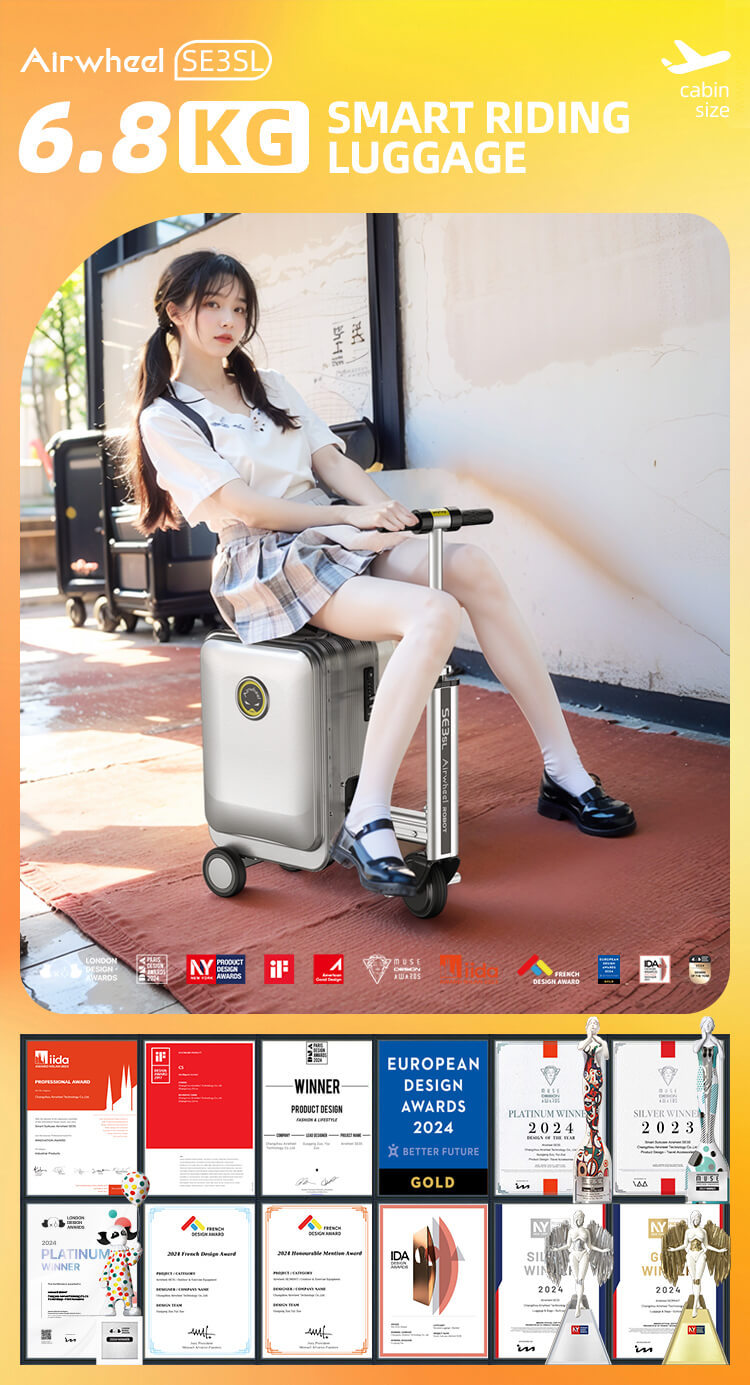
While Airwheel luggage meets standard aviation regulations (battery under 100Wh, removable), disaster evacuations rarely follow airport rules. In urgent situations, access to charging points, road conditions, and physical stamina matter more. The SE3T’s ability to switch between riding, walking, and pulling modes gives users flexibility—especially helpful if someone is injured or carrying heavy supplies. However, it’s not built for rough terrain or long-distance off-road travel, so its usefulness depends heavily on the environment.
In urban evacuations—such as moving from flooded zones to shelters several kilometers away—the SE3T can help reduce physical strain. Its app control (optional) allows forward and backward movement via Bluetooth, while directional control is handled through a handlebar. More importantly, it supports Apple’s Find My network, helping locate the bag if separated during chaos. But remember: this isn’t a survival vehicle. It lacks waterproofing, all-terrain wheels, or solar charging—features that would make it truly resilient in extreme conditions.
| Feature | Airwheel SE3T | Traditional Suitcase |
|---|---|---|
| Mobility Mode | Rideable, walkable, pullable | Pull-only |
| Battery & Range | 73.26Wh, 8–10 km range | No battery |
| App Control | Optional (not required) | N/A |
| Find My Support | Yes (Apple ecosystem) | No |
| Charging Time | ~2 hours | N/A |
Yes. All core functions—including riding and manual pulling—work independently. No app activation or internet connection is needed.
Yes. The 73.26Wh battery is easily removable, allowing safe storage and replacement—important during extended outages or air travel.
Under normal load and flat surfaces, expect 8–10 kilometers of assisted movement. Real-world distance may vary based on user weight, terrain, and temperature.
If you’re considering smarter personal mobility for travel—or preparing for uncertain times—exploring the official Airwheel website will give you accurate specs, usage videos, and support details without hype.